
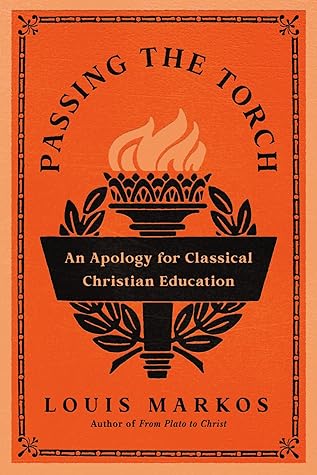
Book Review: Passing the Torch

Passing the Torch by Louis Markos

Passing the Torch: An Apology for Classical Christian Education
by Louis Markos

5 out of 5 stars

This book examines modern philosophies of education and compares them to classical education and especially to Christian education. We begin with the question of the nature of mankind. The entire preface establishes that we are incarnational beings with both body and soul, we have a dualistic nature of both good and evil possibilities inside us, we are moral agents responsible for our own choices, and we are habitual beings who are capable of learning and changing. Therefore, one of the main objects of education is to train people to have the habit of virtuous living and right thinking, so that we react properly to good or evil. We are also subcreators, so we create stories and narratives to explore truth and define our place in the world. We are builders, so we have a desire to create order in a chaotic world. We are political, meaning that we function inside a community, and the purpose of education is to train citizens who are self-regulating within their society.

Continue reading
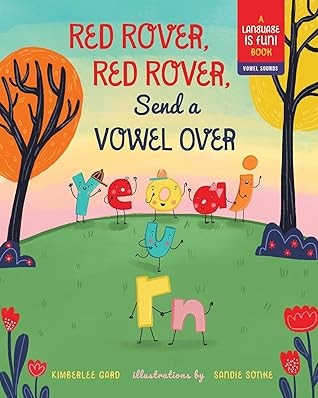
Picture Book Review: Red Rover, Red Rover, Send a Vowel Over (Familius)

Red Rover, Red Rover, Send a Vowel Over by Kimberlee Gard

Red Rover, Red Rover, Send a Vowel Over: A Picture Book about Vowel Sounds (Language Is Fun)
by Kimberlee Gard (Goodreads Author), Sandie Sonke (Illustrator)

5 out of 5 stars

The vowels are nervous to join in the alphabet games on the playground. They know they are different from the consonants and they don’t want to be teased. But Y encourages the vowels to join in and celebrate their differences. After all, consonants can’t make any words without a vowel to help!

Continue reading

Picture Book Review: Don’t Dangle Your Participle

Don't Dangle Your Participle
Don’t Dangle Your Participle by Vanita Oelschlager

My rating: 5 of 5 stars

A hilarious and silly way to teach children about participles and what makes them dangle! Any English teacher would be incredibly happy to use this book in their classroom.

The bright illustrations are hilarious, and the various weird situations that the incorrect sentences describe are brought to life in every picture. If you leave a participle dangling in the wrong place, it could be the children at the zoo who are growling over their snacks, instead of lions growling as they should be!

One of the best things about this book is that it demonstrates how important it is to communicate clearly with language, and what silly results you will get if you aren’t careful with your words. Continue reading