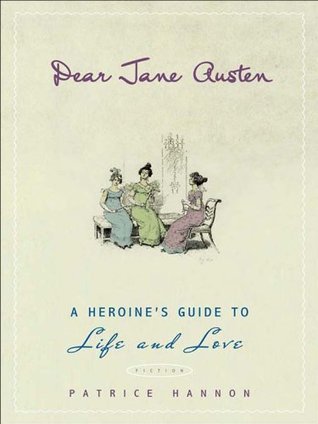
Dear Jane Austen: A Heroine’s Guide to Life and Love
by Patrice Hannon
1 out of 5 stars
The author gives advice through Jane Austen’s voice in a “Dear Abbey” style, answering letters from modern women who want to have a happy ending like the heroines in Austen’s books. Jane Austen is sitting at home and receives letters from the future. She sits down at her little writing desk to answer the letters, but is sometimes interrupted by her family and nieces visiting and commenting on the letters as well.
The letters include questions like: How can I find a Mr. Darcy-type hero to marry? I have fair-weather friends who don’t treat me well; how can I find better friends? My family are horrible people; should I completely cut them out of my life or try to reform them? Why am I always attracted to the “bad boy” type? Should I marry for love or for money? Should I move in with my boyfriend, hoping he will marry me later on? Can I find love if I’m not surpassingly beautiful?
All these questions and more are addressed by Jane Austen, with examples from her books and juvenilia to illustrate what a heroine should do in any situation.
Because of the examples included, there are spoilers for all of Jane Austen’s books, including lesser known ones like The Watsons and Lady Susan. So make sure that you have read all of Jane Austen or watched the movies or miniseries before reading this book.
The book is not really user-friendly, since it assumes that the reader is very familiar with all of Austen’s books and characters, often referencing a plot point or character in vague terms, so that you had just better know who Isabella Thorpe is and why she is a bad friend. There’s no reference to the book title, or who she is friends with, or her place in the story. Just the name of a character. So if you are unfamiliar with Northanger Abbey or have forgotten that particular character’s situation, then you will be lost.
The book also assumes that you are familiar with the Austen family and their history. The letters give little hints about Jane Austen’s life, but leave things unexplained and vague. So make sure you have read a biography of Jane Austen, or at least read through a Wikipedia page before reading this book. One letter says, “I very much regret having left my novel The Watsons unfinished, but it was begun during a bad time for me. My dear, affectionate father, you know, who had such faith in my talent… well, never mind.” The hint is that Austen’s father died during that time, but it is never explained. If you know nothing about Austen’s family life, then you might be confused by the constant hints that are left unexplained.
The writing style is nothing like Jane Austen’s actual style. It is a very poor imitation that tries to sound elegant but constantly regresses into modern slang. A couple of examples are when Jane Austen writes “… Hello – I was joking!” and “… get over it.”
There are also a lot of pop culture references from 2005 that are very dated now, and they bring the writing even lower into vulgarity. There is an off-color joke about Hugh Grant, and a reference to Girls Gone Wild, and the prostitution in Pretty Woman, and several other crude jokes that just have no place in Jane Austen’s world.
I also really hated the structure of Jane Austen’s letter writing being interrupted by her family coming in and reading over her shoulder. Jane then has an odd one-sided conversation with her various family members, where we, the readers, only hear what Jane is saying, not what the family member is saying. It’s just very weird, and breaks up the structure in a jarring way.
This book also just gives terrible advice that does not align with Jane Austen’s own philosophy or morality or Christian perspective. The advice is very modern and liberal, and the moral philosophy is so messed up on so many levels. The psychology here is terrible. I could give you example after example of modern opinions that could never have come from Jane Austen.
I think that scholars just don’t understand the depth of religious belief in Jane Austen’s family, and the way that their lives were utterly centered in Christianity – the kind of Christianity that goes beyond plain moral rules, but includes a deeply personal relationship with Christ. If you miss that about the Austen family, then you can’t understand them at all. I think this author just chose to ignore aspects of Austen’s philosophy that she didn’t like, and substituted her own modern ideas into Austen’s voice. And let me tell you, it doesn’t work! It sounds stupid!
If you are going to write using Jane Austen’s voice, then at least try to make it sound a little bit like she could have possibly written it! I’m perfectly happy with books that are inspired by Jane Austen. But this books purports to be telling the reader “what Jane Austen would say” while putting modern opinions and modern language into her mouth. That’s a very different thing, and I think it’s very poorly done.
This book has been screened on the Screen It First website for objectionable and sensitive content. https://screenitfirst.com/book/dear-jane-austen-a-heroines-guide-to-life-and-love-2595185
The only chapter I liked was the one about fiction vs. reality, where Jane Austen gives some good advice about not letting yourself be willfully deceived by what you wish was true instead of what really is true. She calls it self-willed blindness, and uses some of her characters like Marianne Dashwood as good examples of people who have unrealistic expectations and fantasies that do not match reality. That one part was good – one part out of the entire book.

