
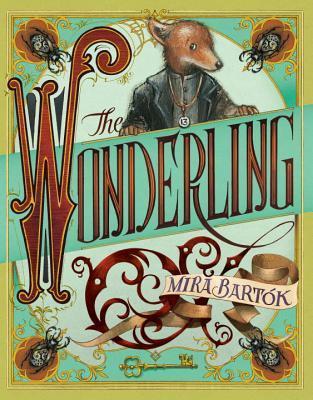
by Mira Bartok
4 out of 5 stars on GoodReads
One of the best things about this book is the rich language and beautiful writing. It really evokes a magical mood into the story, and makes even little details seem important and meaningful. Even though some of the elements of the story are not exactly original (the grim orphanage, the tough streets of a Victorian city, the Dickensian tropes), it’s the writing style that gives it a fresh feeling and an authentic voice.
I loved the world-building of this story, but I really wanted to know more about how groundlings were first created, more of the history of the world, and what place rare magic and magical beings have in that world. Hopefully, some more of this will be explained in the second book.
The Wonderling, or Number 13, is a deliciously innocent and sensitive little foxboy. He loves music, but music of all kinds is forbidden at the orphanage, so he finds solace in the plink plink of rain falling on the roof. He stops to admire the moonlight flowing through his window into the darkness of his grimy little dorm room. As he stops to delight in the small amount of beauty he can find in his ugly world, the reader pauses with him, and reflects with him on the grand questions of life. “Why am I here? What is my purpose?” These questions are what propel Number 13 out into the world to find his true home, his origins, and his lost family. I loved this main character for his kind little heart, his courage, and his desperate search for anything beautiful or good that his soul can cling to. He is such a tender character, I just want to protect him!
Some of the characters feel like they are pulled straight from Dickens’ Oliver Twist, especially the rat groundling Quintus, who is practically Fagin with rat ears. And there are other common trope characters, like the evil headmistress of the orphanage and her bumbling sidekick. Sometimes these feel like they are copy and pasted into the story.
But other characters are admirably original and interesting, like the energetic and inventive Trinket, the funny little boy named Pinecone who dreams of being a knight, and of course, the strange and wondrous Belisha, the Queen of the Night Crows. I loved all these characters!
There are a lot of little ideas, puns, and inside jokes hidden in the book; for instance, there is a ferryman named Norahc, which of course is just Charon spelled backwards. I see what you did there, you clever thing!
One of my favorite things about this book is how there is a bewitching focus on music, songs, and the musical sounds of nature. Since Number 13 has been prohibited from any musical contact for most of his life, once he leaves the orphanage he begins to experience different types of music for the first time, and he is full of awe as his starving heart swells with the sounds. The intimacy of his reactions to music pulls the reader into that appreciation for things we usually take for granted. As a musician, I always love reading stories with music at the center.
Disclaimer: I received an ecopy of this book from the publisher through NetGalley in exchange for a free and honest review. All the opinions stated here are my own true thoughts, and are not influenced by anyone.
 Luminous Libro