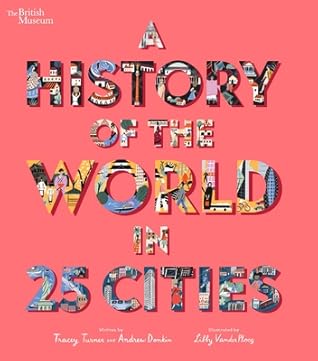
This book goes through history, giving information about different cities around the world at their height. We start with Jericho and end with Tokyo. There are ancient cities that now lie in ruins, old cities that kept getting renewed and rebuilt through the centuries, and modern cities that are comparatively young.
This book analyzes the inner workings of the writing group, The Inklings, showing specific examples of how they encouraged and influenced each other’s writing. We learn about Lewis’ and Tolkien’s individual writing styles, and how their group read aloud portions of their writing. The process of writing, revising, and editing was intimately connected with the influence of the Inklings, despite Lewis famously saying that it was impossible to influence Tolkien: “…you might as well try to influence a bandersnatch.” This book proves Lewis wrong, giving specific examples of times when Tolkien took criticism from the Inklings very seriously and altered major sections of his writing accordingly.
People have been staring at the stars for millennia, marveling at the beauties of the night sky. This book explores how ancient peoples attached meaning to the stars, developed superstitions around horoscopes to gain a sense of control in their world, and studied science and mathematics to understand how the solar system works. The stars have influenced artists and photographers. Today we have a vast amount of information from space probes that tell us about our solar system. From Aristotle to Armstrong, the stars inspire us to keep looking up.
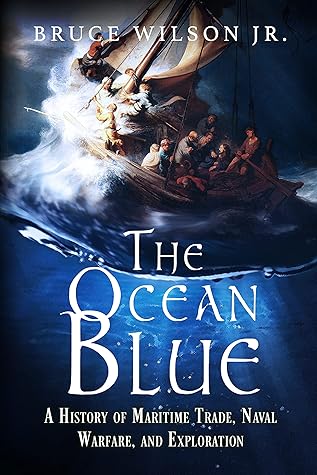
The oceans of the globe both connect and separate the world. Seafaring cultures have shaped the landscape of history. Battles at sea have defined warfare for millennia. The ocean influences art, music, literature, and architecture. This book explores all the ways that the ocean has shaped our history from the ancient Greeks and Egyptians to the modern day.
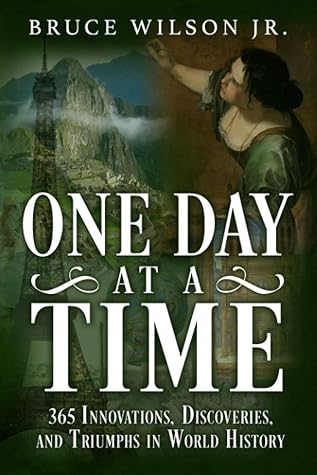
History is a deep well of wild facts and weird stories. This book presents 365 amazing events in history that still shape our world today. We begin with the first known writing from 3100 BC and travel through history all the way to 2019 when scientists were able to take the first photograph of a black hole. This book includes artists, scientists, royals, politicians, engineers, musicians, doctors, and ordinary people who did extraordinary things.
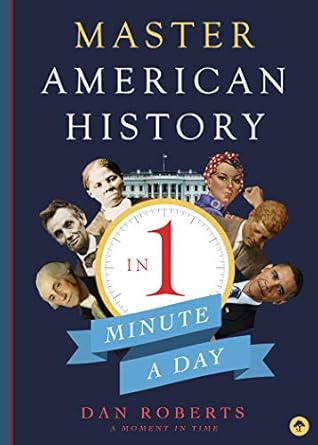
In one page snippets, you can learn about American history from Christopher Columbus to President Biden. The book is divided into sections about exploration, colonization, the American Revolution, nationalization, the American Civil War, and the Industrial Revolution, economic struggle and the World Wars, and the “era of social and economic advance”, finishing up by calling recent history “the era of reaction, social struggle, and political contention.”
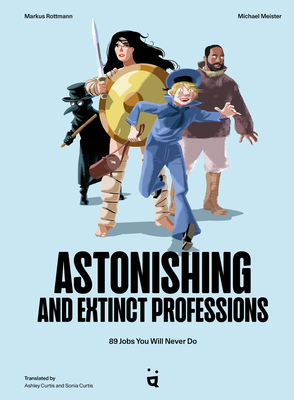
Some jobs have gone extinct over the years. Princes don’t need a whipping boy to take their punishments. Modern sewers have done away with massive rat populations and rat catchers. Grand estates don’t find it fashionable anymore to hire an ornamental hermit to live in a cave grotto. Since the invention of the refrigerator, we don’t need ice harvesters to bring ice into the city. Most people do their own crying at funerals, instead of hiring wailing women to cry. Thanks to modern plumbing, we don’t need to hire anyone to shovel waste out of our toilets. Now that most people can read newspapers, we don’t need balladeers or town criers to shout out the daily news.
This is a bittersweet story of a young girl who passes along information to Washington’s army during the American Revolutionary War. Her brother is a soldier, and they have a secret plan to watch the movements of ships in the harbor. Maddy Rose hangs out her washing once a week. Her unmentionables, petticoats, and stockings, hung out in a certain order, will tell her brother which ships in the harbor are friendly, and which are British ships likely carrying weapons.
This book tells how and why the seven wonders of the world were built and by whom. Temples, pyramids, tombs, gardens, and a lighthouse; these incredible constructions stood for hundreds of years to astonish and amaze. But today we know very little about them. Archeologists and historians try to piece together the facts from ancient history to understand how such massive statues and temples were built.
Cindy and Jack are visiting a museum when they are magically transported through one of the displays into ancient Africa. In the middle of the jungle, the children meet a man with a beautiful flute who escorts them to the royal palace to meet the king of the Edo empire. There they find court intrigue and a royal secret.
I loved this fun story! The history is really interesting and we get to learn about the culture of the Edo empire (also called the Benin Kingdom) in ancient Nigeria. It was an amazing kingdom with roads and infrastructure and walled cities and trade. The king was called the Oba, and Cindy and Jack get to meet the Queen as well. I loved reading about the unique customs and manners of the people, their greetings and social hierarchy. Everything from the way they built their homes to the way they ate their food had a special organization to it.