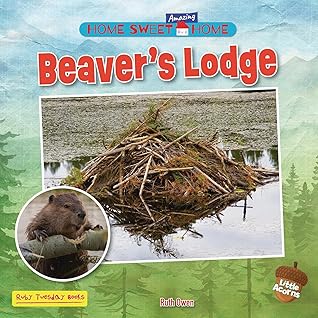
Beaver’s Lodge (Home Sweet Amazing Home (Little Acorns))
by Ruth Owen
This picture book gives some basic facts about beavers, along with photos of real beavers building a dam, swimming, or gnawing on trees. We learn how beavers build a lodge to live in, how they care for their young kits, and how they warn each other of approaching danger.
I loved this interesting book, and it’s perfect for young readers ages 5-8 to learn about animals in nature. The back of the book has a little glossary of words and an index where you can look up the facts about beaver’s food, kits, ponds, predators, and their tails and teeth. This would be perfect for a young student to use in a book report, because all the information is well-organized.
The photos are so vibrant and full of action! My favorite was the photo of a beaver slapping their tail on the surface of the water.
Disclaimer: I received this book from a publisher in exchange for a free and honest review.
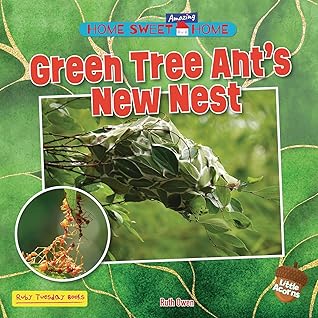
Green Tree Ant’s New Nest (Home Sweet Amazing Home (Little Acorns))
by Ruth Owen
This picture book gives some basic facts about Green Tree Ants, along with photos of real ants building a nest, protecting their larvae, or eating other bugs. We learn how ants can form a bridge from leaf to leaf with their bodies, and then they start to weave the leaves together with the silk that spews from the larva. There is a picture that shows how the ants develop from a tiny larva into a larger pupa and into a full-grown ant.
I loved this interesting book, and it’s perfect for young readers ages 5-8 to learn about insects in nature. The back of the book has a little glossary of words and an index where you can look up the facts about the ants food, nests, and the different roles they have within the colony.
The photos are very detailed and you get to see all the tiny little ants working together. I loved seeing all the different types of ants- guard ants, worker ants, and of course the queen.
Disclaimer: I received this book from a publisher in exchange for a free and honest review.
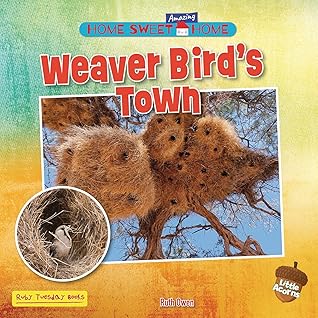
Weaver Bird’s Town (Home Sweet Amazing Home (Little Acorns))
by Ruth Owen
This picture book gives some basic facts about weaver birds, along with photos of real weaver birds building their huge nests, caring for their young, and sharing their trees with other birds. We learn how weaver birds use straw to build huge nests, and how they protect themselves and their young from predators like snakes.
I loved this interesting book, and it’s perfect for young readers ages 5-8 to learn about animals in nature. The back of the book has a little glossary of words and an index where you can look up the facts about weaver birds’ chicks, eggs, food, and habitat in Africa. This would be perfect for a young student to use in a book report, because all the information is well-organized.
The photos are so beautiful! My favorite was the photo of a neighbor bird feeding the nearby chicks. It shows how the birds all help each other. However, I did not like the photos of snakes because I’m scared of snakes. I skipped that page!
Disclaimer: I received this book from a publisher in exchange for a free and honest review.
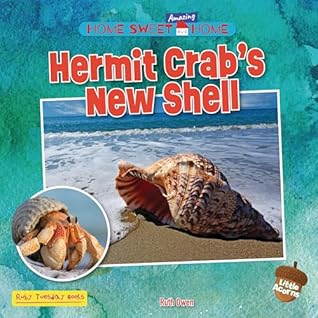
Hermit Crab’s New Shell (Home Sweet Amazing Home (Little Acorns))
by Ruth Owen
This picture book gives some basic facts about hermit crabs, along with photos of real hermit crabs switching to a new shell, eating other sea creatures, or hiding from predators. We learn how hermit crabs will line up to swap shells from the biggest to the littlest, and they all get a new home so that they can protect their soft abdomen.
I loved this interesting book, and it’s perfect for young readers ages 5-8 to learn about animals in nature. The back of the book has a little glossary of words and an index where you can look up the facts about hermit crabs exoskeletons, eggs, and how they hunt for food. This would be perfect for a young student to use in a book report, because all the information is well-organized.
The photos are so interesting and weird-looking! My favorite was the photo of a hermit crab using a glass jar for a shell. They will use trash as the perfect shell for themselves, and you can see the soft curled abdomen through the clear glass.
Disclaimer: I received this book from a publisher in exchange for a free and honest review.
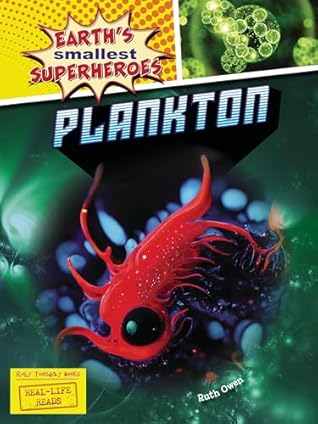
Plankton (Earth’s Smallest Superheroes (Real-Life Reads))
by Ruth Owen
This picture book gives some basic facts about plankton, and the different types of plankton and what they do. We learn how phytoplankton create photosynthesis and produce oxygen. We learn about different types of zooplankton like krill, which are a favorite food of many sea creatures like whales.
I loved this interesting book, and it’s perfect for young readers ages 6-9 to learn about tiny plankton in nature. The back of the book has a little glossary of words and an index where you can look up the facts about algae, bacteria, copepods, water fleas, and the supposedly immortal jellyfish.
The photos are so weird and wild-looking! All those tiny creatures look like little aliens. There is also an explanation of how whales eat krill and krill eat the nutrients from the whale poop. And there is a delightful photo of whale poop floating in the ocean! Ew!
I did not like the section about climate change, because the text talks as if climate change were empirical fact instead of just a theory. I wish they would be more clear about what is a scientific fact and what is just conjecture and theory.
Disclaimer: I received this book from a publisher in exchange for a free and honest review.
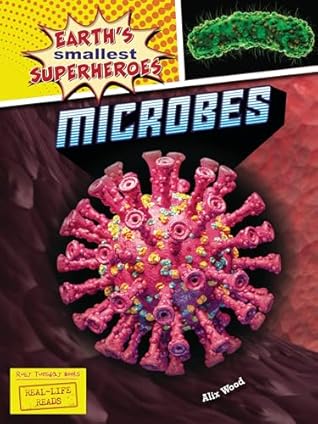
Microbes (Earth’s Smallest Superheroes (Real-Life Reads))
by Alix Wood
This picture book gives some basic facts about the types of microbes, such as bacteria, archaea, viruses, and fungi. We learn how some archaea can live in the middle of hot springs or in a cow’s stomach. There are slime molds that will send out little tendrils to look for food. Penicillin is created from fungi, and some yeast fungi can even produce insulin for diabetics to use.
I loved this interesting book, and it’s perfect for young readers ages 6-9 to learn about microbes. The back of the book has a little glossary of words and an index where you can look up the facts about how microbes can affect our health in both good and bad ways. This would be perfect for a young student to use in a book report, because all the information is well-organized.
The photos are kind of gross sometimes, but so interesting! I especially liked seeing how microbes help us to create yogurt, cheese, and yeast bread. There are even microbes that work to ferment cocoa beans to make chocolate!
I did not like the pages that talked about the universe being millions of years old or about global warming as if those things are scientific fact instead of just theories. The book should have made it clear that those are only theories and not proven fact.
Disclaimer: I received this book from a publisher in exchange for a free and honest review.
 Luminous Libro